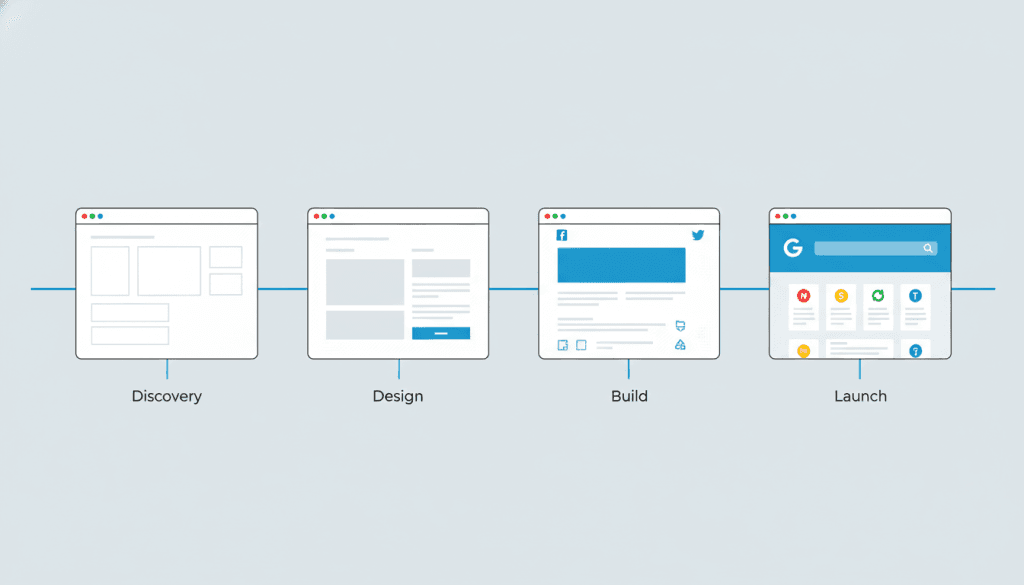
When a business owner asks how long a website takes to build, the honest answer is: it depends on what you’re building, who’s building it, and how quickly decisions get made on your end. But there are real ranges, and understanding them helps you plan your project realistically.
The Timeline Variables That Matter Most
No two projects move at the same speed, but the factors that most affect timeline are consistent:
- Scope and page count — A five-page brochure site moves much faster than a 20-page site with custom service pages, location pages, and a blog.
- Who’s writing the content — If you’re supplying copy, photos, and information, the project speed depends on how quickly you can provide it. Many studios offer copywriting; if yours does, that removes a common bottleneck.
- Custom design vs. template starting point — A fully custom site from wireframe to design to build takes longer than a template-based approach, but the result is a site that actually looks like your brand. Our post on custom websites vs templates goes deeper on that tradeoff.
- Revision cycles — Every round of client feedback and revisions adds time. Studios with a clear structured process (defined rounds, clear feedback windows) move faster than those with open-ended back-and-forth.
- Integrations and custom functionality — If your site needs a booking system, CRM integration, a payment gateway, or a custom database, that adds development time on top of the design phase.
Realistic Timelines by Project Type
Here’s what a well-run studio should be able to deliver:
- Simple brochure site (5–8 pages, template-based): 3–5 weeks
- Custom small business site (8–15 pages, original design): 6–10 weeks
- Custom site with blog, service pages, and location pages: 8–12 weeks
- eCommerce site with product catalog: 10–16 weeks, depending on catalog size
- Full redesign of an existing site: 6–12 weeks — content migration adds time, but there’s less discovery work
These timelines assume you’re working with a studio that has a defined project process, not a freelancer doing it on weekends.
Why Timelines Slip (and How to Prevent It)
In our experience, most delays come from the client side, not the studio side. That’s not a criticism — business owners are busy and have a hundred priorities competing for attention. But knowing the common causes helps you avoid them:
- Late content delivery — If a studio is waiting for your logo, text, photos, or service descriptions, the project stops. Decide at kickoff what you’re responsible for providing and set yourself a deadline.
- Feedback delays — Clear feedback on design concepts, fast. Studios typically need a response within a week or two of each deliverable. Waiting three weeks on a design round turns a 10-week project into a 16-week project.
- Scope creep — “While you’re at it, can we add a member portal?” Adding new requirements mid-build pushes the timeline and often the budget. Lock the scope early and manage additions separately.
A good studio will manage this proactively with a defined project schedule, clear milestones, and regular check-ins. If a studio can’t tell you what the milestones are before the project starts, that’s a red flag about how the project will go.
What Happens If You Need It Faster?
Rush timelines are possible, but they usually mean one of three things: fewer pages, less custom design, or a premium price. If you have a hard launch date — a trade show, a product launch, a rebrand announcement — be upfront about it from the first conversation. A studio that knows the constraint can design a phased approach: launch the core pages on time, then build out the rest.
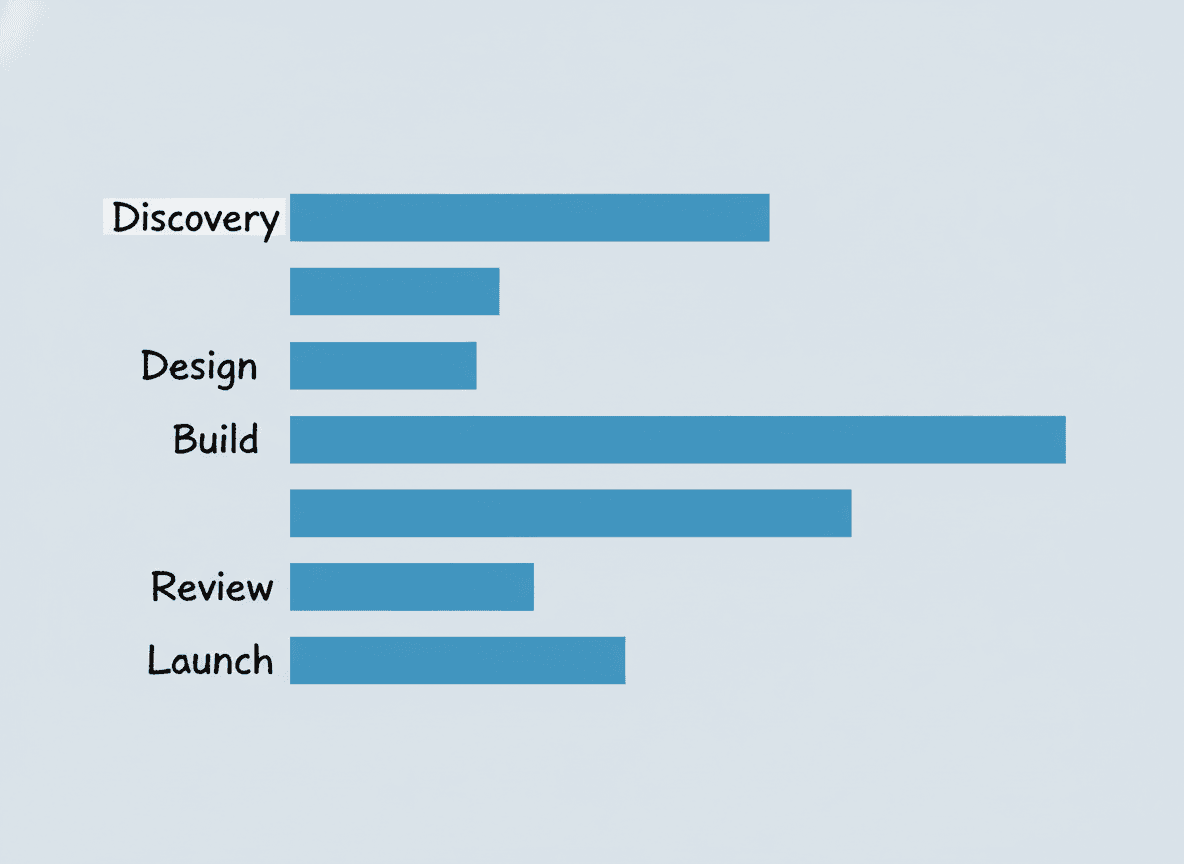
Some businesses also benefit from a fast landing page to capture leads while the full site is being built. This is worth discussing if you have an immediate lead generation need that can’t wait three months.
What You Should Expect After Launch
Launch isn’t the end of the timeline — it’s the beginning of a different phase. Plan for a few weeks of post-launch tweaks as you see how real visitors interact with the site. Good studios include a defined post-launch support window. After that, you should have a clear plan for ongoing maintenance and content updates. If you’re on WordPress, many of those updates are things you can handle in-house.
If you have a target date in mind, tell us about it when you reach out for a quote — we’ll give you a realistic assessment of what’s achievable and how to get there.
Frequently asked questions
Can a website be built in a week?
A very basic page — essentially a digital business card with contact information — can be deployed quickly. A functional, well-designed business website rarely can. Rushing design produces templates, not strategy. Rushing development produces fragile code. If you need something fast, the right approach is to scope down to a landing page or minimal launch version and build out properly after.
What causes website projects to run over schedule?
The most common causes are delayed content from the client (text, photos, information), slow feedback on design concepts, and scope changes added mid-project. A well-run studio will have a clear project schedule with defined client responsibilities and deadlines. Holding to those is how projects stay on track.
How long does a website redesign take compared to a new build?
Redesigns often move faster in the strategy phase because you already have a business, content, and brand to work with. But content migration, URL mapping, and SEO redirect planning add steps that new builds don’t have. Plan for a similar timeline overall — typically six to twelve weeks depending on scope.
What should I prepare before my website project starts?
Before kickoff, have your brand assets ready (logo files, any brand colors), a clear picture of your services and target customers, any photos you want to use, and access credentials to your domain registrar and current host. The more prepared you are at kickoff, the faster everything moves afterward.
Do I need to be heavily involved throughout the build?
You don’t need to be in the weeds, but you do need to be available. Expect a focused kickoff session, reviews at major milestones (design concept, full build review, pre-launch check), and a few rounds of feedback. Plan for roughly three to five hours of your time over the course of the project — concentrated at key decision points, not spread daily.