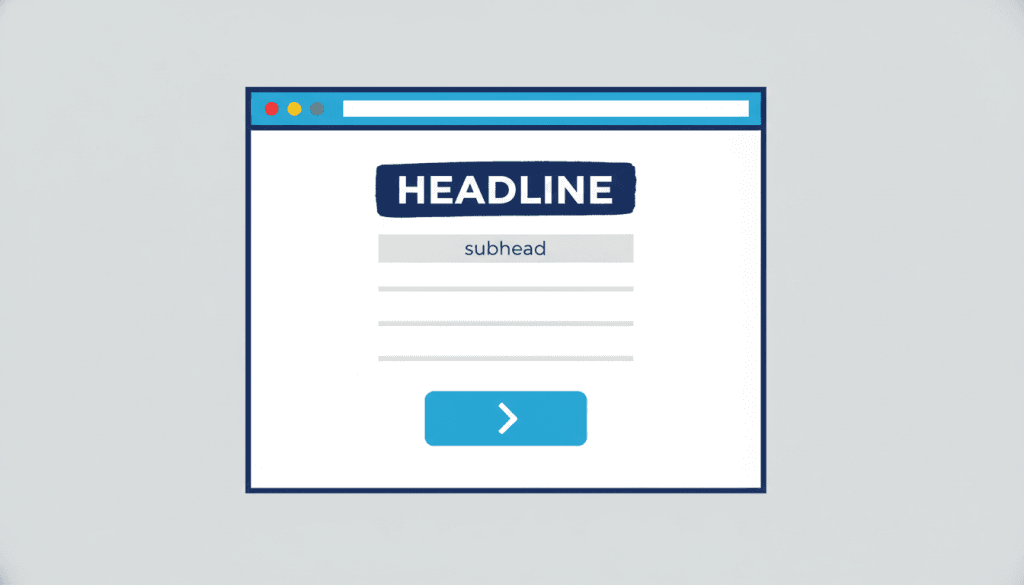
A website can look stunning and still fail completely. In most cases, the culprit isn’t the design—it’s the words. Copy that speaks directly to what a visitor needs, and then asks them clearly to take action, is what turns a good-looking site into one that actually generates leads.
Start with the visitor, not the business
The most common mistake we see on Phoenix-metro business websites is copy written entirely from the business owner’s perspective. It leads with how many years the company has been open, lists certifications, and describes the team’s passion for excellence. None of that is inherently wrong—but it comes before the visitor’s question has been answered.
The visitor arrives with a specific problem. They need a plumber, they want a lawyer who handles their type of case, they’re looking for a dentist taking new patients. The first thing your copy needs to do is demonstrate that you understand that problem and that you solve it. Everything else—the credentials, the story, the team—supports that claim. It doesn’t lead it.
Before writing a single word, write out the top three questions your best customers ask before hiring you. Your homepage copy should answer those questions within the first two scrolls.
Clarity beats cleverness every time
Website copy is not an essay. Visitors scan before they read. They jump to bold phrases, bullet points, and headings to decide if a page deserves their attention. If your value proposition requires three careful sentences to understand, it will not survive contact with a real visitor who has three other tabs open.
Aim for copy your reader could text to a friend. “We build custom websites for Scottsdale businesses that want more leads” is better than “We leverage strategic digital solutions to maximize conversion opportunities for enterprise and SMB clients.” The second version says less while using more words.
This is especially true on landing pages, where a visitor has arrived from a specific ad or search and needs to be confirmed in their choice immediately. Every word on a landing page should earn its place.
Structure your pages around a logical arc
Good website copy follows a structure that mirrors how people make decisions. Start with the problem or the outcome the visitor wants. Move into what makes your approach different and why it works. Support that with proof—results, process details, specifics. Then make a clear, simple ask.
The ask matters more than most owners realize. “Contact us” is weak. “Get a free quote” is specific and tells the visitor exactly what they’ll receive and that it costs them nothing. “Book your free 30-minute strategy call” is better still for service businesses because it sets a concrete expectation. The CTA should feel like the natural next step—not a sales push.
Understanding what makes a website convert goes beyond copy alone, but copy is the layer that either makes design work harder or wastes it entirely. The strongest-converting pages we’ve seen are those where design and copy were planned together from the start.
Write for one person, not a market segment
Picture your ideal customer specifically. Not “small business owners in the Phoenix area”—picture a specific person with a specific problem who found your site on a Thursday afternoon. Write to that person. Use “you” more than “we.” Make them feel seen.

This is why copy for a dental practice reads completely differently from copy for a general contractor—the visitor, the decision, the fear, and the desired outcome are all different. Generic copy that could apply to anyone applies to no one.
It’s also why we spend time on messaging during a web design project, not just layout and visuals. A beautifully designed page with weak copy underperforms. A slightly simpler design with sharp, specific copy consistently outconverts it.
Proof is copy too
Testimonials, case details, specific outcomes—these are copy, and they’re often the most persuasive copy on the page. A review that says “Great service!” does almost nothing. A review that says “We were spending $2,000 a month on ads and getting three calls a week. After the redesign, we get twelve calls a week from organic search alone” is a story. Stories convert.
If you have real outcomes you can share—even described qualitatively rather than with specific numbers—work them into your copy. They function as proof that your claims are real, which is the thing every visitor is silently trying to verify before they reach out.
Copy works best when it sits inside a clear brand — if you’re still sorting out how the two relate, our guide on branding vs. web design is a useful next read.
When you’re ready to put copy that genuinely sells onto a site designed to make it land, reach out for a free quote and we’ll talk through what that looks like for your business.
Frequently asked questions
How long should website copy be on a service page?
Long enough to answer the visitor’s key questions and short enough to hold attention. For most service pages, 500–900 words is the right range. The quality of what’s said matters far more than the word count. If you can answer every meaningful objection in 500 words, stop there. If a complex service genuinely needs 900 words to explain clearly, use them—but earn every sentence.
Should I write my own website copy or hire a copywriter?
If you can write clearly and you understand your customer’s perspective, writing your own copy is a legitimate option—nobody knows your business better than you do. A professional copywriter adds value primarily in structure, persuasion technique, and the discipline to cut what doesn’t earn its place. For most small businesses, the right move is to draft your core messages, then have a professional edit for clarity and conversion.
What is the most important copy on a homepage?
The hero headline and sub-headline. Most visitors decide in under five seconds whether a page is worth their time, and that decision is made at the top of the page before scrolling. Your hero headline should state clearly who you help and what you do for them. The sub-headline adds the “why choose us” layer. If those two lines are sharp, the rest of the page has a fighting chance.
How do I write a call to action that works?
Be specific about what happens next and make it low-friction. “Get a free quote” outperforms “contact us” because it tells the visitor exactly what they receive and that there’s no cost. Use active verbs. Make the action feel like a natural next step rather than a commitment. And place the CTA where it makes logical sense in the page arc—after you’ve earned the ask, not before.
Does SEO affect how I should write website copy?
Yes, but not in the way most people think. Modern SEO rewards copy that answers real questions thoroughly and clearly—which is exactly what converts visitors too. Write for your human reader first. Work your primary keyword phrase naturally into the headline and early paragraphs. Don’t stuff keywords. Pages that genuinely help readers tend to rank well because search engines have gotten good at identifying genuinely helpful content.