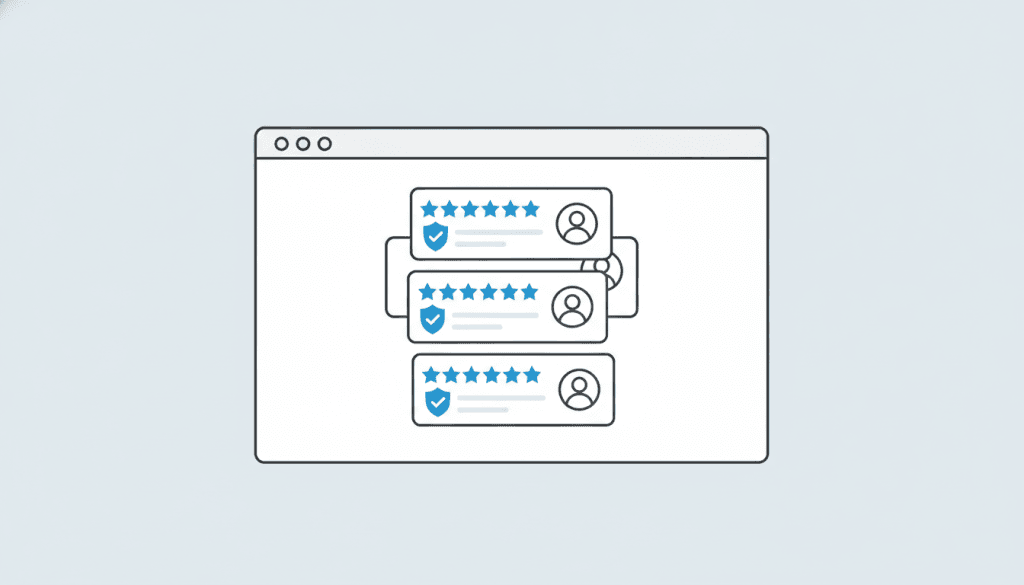
Arizona customers are friendly, but they’re not naive. Between transplants who’ve been burned before and longtime locals with a low tolerance for hype, the average person landing on your website is quietly asking one question: can I trust these people? Everything on the page either answers that question with a yes or leaves a doubt hanging. The businesses that win locally are the ones that answer it fastest.
We build websites across the Valley, and we’ve watched the same thing happen again and again—two businesses with similar services, similar prices, and very different results, entirely because one site felt trustworthy and the other felt like a gamble. Trust isn’t a vague brand quality here; it’s a set of concrete signals you can deliberately put on the page. Here are the ones that actually move a cautious Arizona customer from interested to convinced. The reassuring thing is that none of them depend on being a big, established name—a small, honest local business can send every one of these signals as clearly as a national brand, and often more convincingly.
Show real people, not a faceless brand
Local customers want to know who they’re dealing with. A genuine photo of your team, the owner’s name, a short and honest story of how the business started—these small human touches do enormous work. They tell a visitor that behind the website is an actual person in the Valley who will answer the phone and stand behind the job. A site that hides its people behind generic language quietly signals the opposite, and cautious buyers notice.
This is especially true for service businesses where someone is inviting you into their home or trusting you with something that matters. Being visibly, specifically local—naming the neighborhoods you serve, referencing the Arizona reality your customers live in—makes you feel like a neighbor rather than a stranger. A photo of the actual owner standing in front of an actual Valley storefront does more than any polished tagline, because it’s unfakeable in a way that copy never is. People trust faces, and they trust specifics.
Put reviews where they’ll be seen
Nothing reassures a wary customer like other customers. Genuine reviews are the closest thing to a friend’s recommendation, and Arizona buyers lean on them heavily before they call. Featuring real reviews on your site—not just leaving them stranded on a distant platform—lets a visitor see proof of good work at the exact moment they’re deciding. The specificity matters more than the star count; a review that mentions a real problem you solved is worth ten generic five-star blurbs.
The habit of earning and displaying reviews compounds over time. We cover how to build that steady stream in our guide to getting more Google reviews, which pairs naturally with putting those reviews to work on your site.
Be transparent about what you do and what it costs
Vagueness reads as evasion. When a business is clear about its services, its process, and at least the ballpark of what things cost, it signals confidence and honesty. Arizona customers are quick to distrust a site that dodges pricing entirely or buries what it actually does behind buzzwords. You don’t have to publish an exact price list, but giving honest ranges and explaining how you work removes the suspicion that you’re hiding something.
This transparency is also persuasive in its own right. Clear, confident language about your work reassures a reader while it informs them—a point we explore in our piece on website copy that sells. The tone that builds trust and the tone that sells are, more often than not, the same honest tone.
Make credentials and guarantees visible
Licenses, certifications, insurance, warranties, satisfaction guarantees, years in business, professional affiliations—these are proof points, and proof points calm nerves. In Arizona’s service trades especially, showing that you’re licensed and insured is often the difference between a call and a pass. Display these signals plainly rather than assuming customers will dig for them. A visible guarantee, in particular, tells a hesitant buyer that the risk is on you, not on them.
Badges and logos from recognized local organizations add another layer. They borrow trust from institutions the customer already recognizes, shortening the distance between skepticism and confidence. The key is to place them where the decision happens—near your call button, beside your pricing, at the point where a visitor is weighing whether to reach out—rather than tucking them in a footer no one scrolls to. A guarantee only reassures if it’s seen at the moment of hesitation.
Let the design itself signal credibility
Before a visitor reads a single word, the look and feel of your site has already made an argument. A fast, clean, modern design says “this is a real, capable business.” A slow, cluttered, or dated one plants doubt no amount of good copy can fully undo. Design is a trust signal in itself, which is why polish and professionalism are never just cosmetic. Everything we’ve covered here feeds into the larger question of what makes a website convert—and trust is the thread running through all of it.
The encouraging part is that these signals are all within your control. You don’t need to be the biggest name in the Valley to feel like the safest choice. You just need to answer the customer’s quiet question—can I trust you?—before they have to ask it out loud.
Frequently asked questions
What’s the single most important trust signal?
For most local businesses, genuine reviews from real customers do the heaviest lifting, because they’re independent proof. Close behind is simply showing the real people behind the business.
Do I need a lot of reviews before they help?
No. A handful of specific, honest reviews often persuades more than dozens of vague ones. Steady, recent reviews matter more than a big one-time pile, and quality beats quantity.
Can trust signals really change how many customers I get?
Yes. Two sites with the same traffic can convert very differently based on trust alone. Reducing a customer’s hesitation is one of the most reliable ways to turn existing visitors into calls.
If your website isn’t earning trust the way it should, that’s a fixable problem. Get a free quote and we’ll show you where an Arizona customer might be hesitating—and how to reassure them.