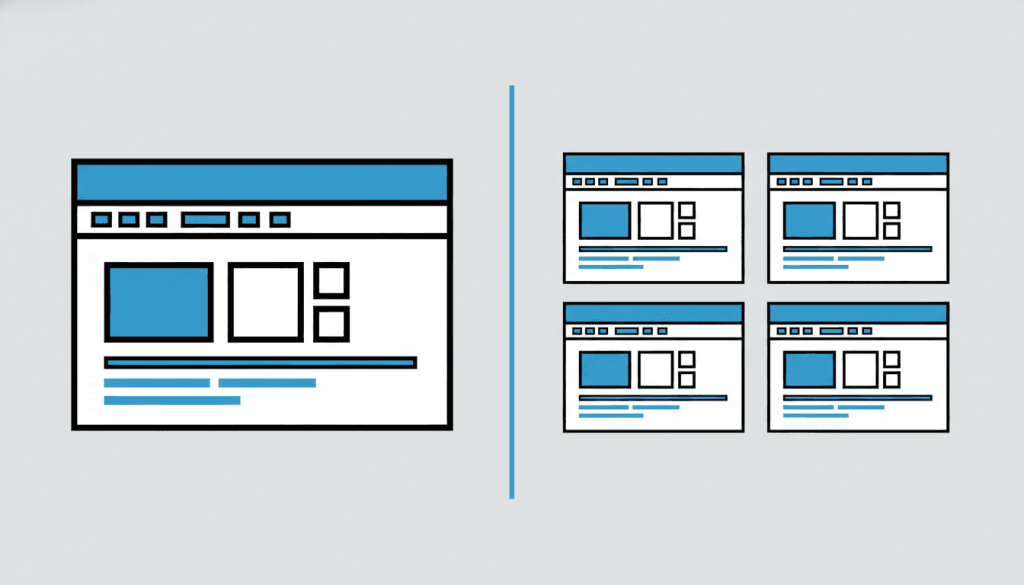
Every business owner hits this crossroads early in the website conversation: do I need something custom, or will a good template do the job? The answer isn’t the same for everyone, and a studio that tells every client the same thing is selling, not advising. Here’s how to think through it honestly.
What a Template Actually Is
When we say “template,” we mean a pre-built theme or design framework that was created for general use — often sold to hundreds or thousands of businesses. You customize it with your logo, colors, and content, but the underlying structure, design decisions, and layout logic were made by someone who didn’t know your business at all.
Templates range in quality from terrible to quite good. A premium WordPress theme from a reputable developer can produce a solid, professional result if it’s configured well and used for the right type of site. The challenge is that the design decisions were made for a hypothetical business, not yours.
The real-world signal that a site was template-built: you can search Google Images for the theme and find a hundred other businesses with the same layout. That’s not a dealbreaker for everyone, but it is a tradeoff worth understanding.
What Custom Design Actually Means
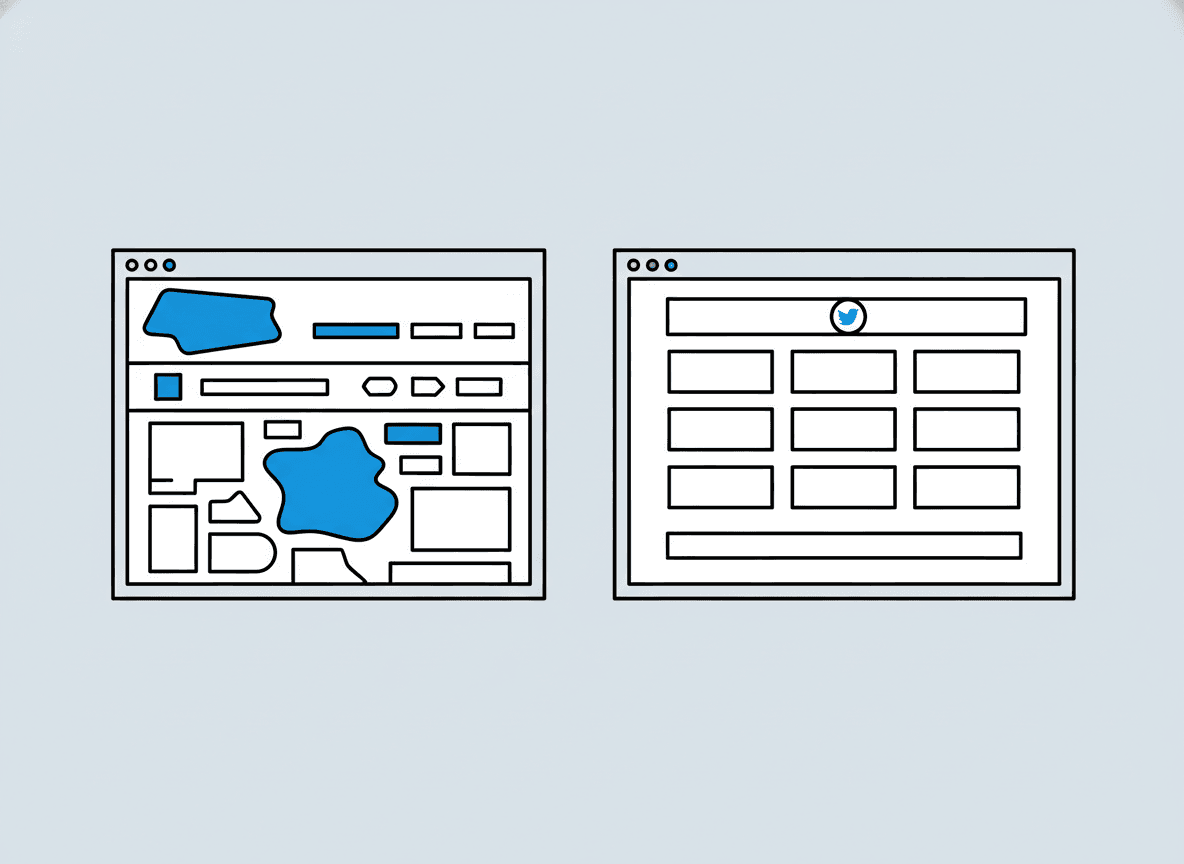
A custom website starts from your brand, your customers, and your goals — not from a pre-built layout. The design is created specifically for you: wireframes that map out your unique content structure, visual design rooted in your brand identity, and development built to serve your specific conversion goals.
This is what a proper custom web design process looks like:
- Discovery: understanding your business, customers, and competitive context
- Strategy: defining page architecture, conversion paths, and content priorities
- Wireframes: structural layouts before visual design begins
- Visual design: original design built on your brand, not adapted from a template
- Development: clean build that matches the design exactly
The result looks like your business, not like “a website.” It’s also designed around how your specific customers think and what they need to see before they contact you. Combined with a strong brand identity, a custom site is a genuinely differentiated asset.
When a Template Is Fine
Templates aren’t always wrong. Here’s when they’re a reasonable choice:
- You’re early-stage, testing whether a business idea gets traction, and need to move fast with limited budget.
- Your business is in a category where visual differentiation doesn’t significantly affect conversion — some service industries are more relationship-driven than design-driven.
- You have a tight budget and a simple scope — five pages, contact form, nothing more.
- You genuinely have the time and comfort to configure a template well yourself.
The caveat: even when a template is the starting point, the quality of the execution matters enormously. A sloppily configured premium theme produces a worse result than a carefully built basic one.
When Custom Is Worth the Investment
Custom is the right call in most of these situations:
- You’re in a competitive market where design quality is part of how customers choose (Scottsdale tends to have high design expectations).
- Your site needs to be a primary lead-generation engine, not just an online brochure.
- You have an existing brand that a template can’t honor without looking forced.
- You need specific functionality that templates don’t cleanly support.
- You’re competing against businesses with strong, well-designed sites.
For most established Scottsdale and Phoenix-metro businesses we work with, custom is the right path. The businesses we serve have invested in their service quality, their team, and their reputation — a template site signals the opposite of all that.
The Cost Difference Is Smaller Than You Think
A common objection: “custom is too expensive.” The gap has narrowed significantly. A quality custom WordPress site doesn’t have to be ten times the cost of a template. The difference often comes down to design time, and if your studio has a refined process, that’s not as expensive as it used to be.
More importantly: the cost of a site that doesn’t convert is higher than the premium for doing it right. A cheap template that doesn’t generate leads costs you more over two years than the custom build would have. We’ve seen this pattern repeated across Valley businesses. Our post on website costs in Scottsdale breaks down the real numbers.
If you’re not sure which direction is right for your business, tell us about your situation when you request a quote — we’ll give you an honest recommendation, not just the most profitable one.
Frequently asked questions
Can a WordPress theme be made to look fully custom?
With enough customization, a premium theme can be made to look significantly different from its default appearance — but there are limits. The underlying layout logic and design assumptions are baked into the theme code. A skilled developer can push themes far, but at a certain point the cost of overriding everything might approach the cost of building from scratch on a lighter foundation.
Do custom websites perform better in search results than template sites?
The platform and cleanliness of the build affect SEO more than whether it was custom or template. A well-built template site can outrank a poorly built custom one. That said, custom sites are usually faster (because they’re leaner), better structured semantically, and more precisely optimized for specific keywords — all of which contribute to search performance over time.
How do I know if a studio is showing me a template or real custom work?
Look at their portfolio critically. Do multiple sites look like variations on the same theme? Is there genuine visual diversity across clients? Ask directly: do you start from a purchased theme or from a blank canvas? A confident studio with real custom work will answer clearly and be able to show you the process documentation behind their designs.
What if I need a fast launch — can I start with a template and customize later?
Phased approaches work, but template-to-custom migrations are rarely clean. Design decisions made for the template often conflict with the brand later. If speed is the constraint, a better approach is often scoping down — launch a smaller custom site on time, then build it out properly rather than starting from a template you’ll outgrow.
Is a custom website better for local businesses competing in Scottsdale?
In most cases, yes. Scottsdale is a high-expectation market — consumers here have seen excellent design and notice when a site doesn’t meet that bar. In competitive service categories like home services, medical, legal, and real estate, a custom site built specifically around local trust signals and conversion architecture performs meaningfully better than a generic template.